01 · ProParent
A founder-led parenting mission, turned into a launched product.
2023–2026 — Head of Product · COO
Built forWebMobileAdmin tools
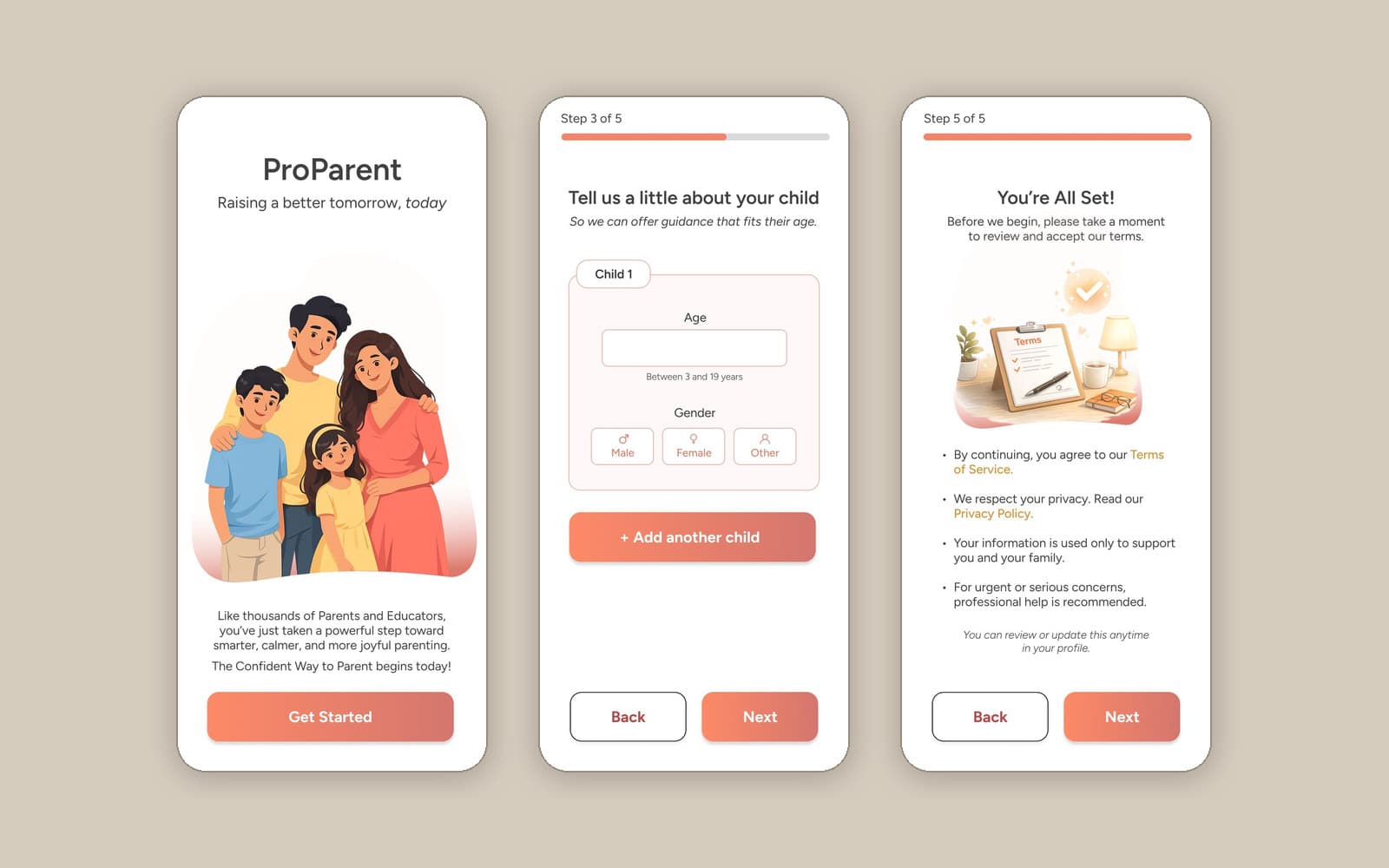

BENEATH: THE PARENT ONBOARDING FLOW, AS SHIPPED
I turn complexity into digital products people understand.
Previously: Shell · Rakuten · Vodafone · Infosys
02 — Complexity
The mess has patterns. These are the eight kinds I meet most often.
01 Unclear direction
Everyone agrees it's important. Nobody agrees what it is.
02 Scattered user needs
Twelve user types, one interface, no priorities.
03 Too many voices
Six voices, three roadmaps, no owner.
04 Technical constraints
The right solution doesn't run on the systems you have.
05 Unwritten vision
The vision is clear in one head. The spec doesn't exist yet.
06 Messy operations
The product works. The process around it doesn't.
07 Legacy systems
Fifteen years of decisions nobody remembers making.
08 High-pressure launch
The date is public. The product isn't ready.
03 — Lenses
Six lenses, one problem. I look at the same mess from every side before anything gets designed.
Behind every requirement is a person with something at stake. I start by finding out who they are and what they're worried about.
— Who gets hurt if we get this wrong?
01 of 06PeopleA product stays simple when everyone knows what it won't do. I help teams work that out early, before anything gets built.
— What's left out of the first version, on purpose?
02 of 06ProductEvery feature should improve a number the business cares about. I find that number before design starts.
— What number tells us it worked?
03 of 06BusinessProducts don't live alone. They sit inside teams, data, and processes — so I map that world first, then design the screens.
— What else does this affect?
04 of 06SystemsWhat's technically possible shapes what's worth designing. I work with the limits from day one, not at the end.
— What's already there to work with?
05 of 06TechnologyLaunching late kills more products than launching small. I'd rather trim the plan than lose speed.
— What's the smallest version worth launching?
06 of 06Execution01 — People
Behind every requirement is a person with something at stake. I start by finding out who they are and what they're worried about.
— Who gets hurt if we get this wrong?
02 — Product
A product stays simple when everyone knows what it won't do. I help teams work that out early, before anything gets built.
— What's left out of the first version, on purpose?
03 — Business
Every feature should improve a number the business cares about. I find that number before design starts.
— What number tells us it worked?
04 — Systems
Products don't live alone. They sit inside teams, data, and processes — so I map that world first, then design the screens.
— What else does this affect?
05 — Technology
What's technically possible shapes what's worth designing. I work with the limits from day one, not at the end.
— What's already there to work with?
06 — Execution
Launching late kills more products than launching small. I'd rather trim the plan than lose speed.
— What's the smallest version worth launching?
01 / 06
01 — People
Behind every requirement is a person with something at stake. I start by finding out who they are and what they're worried about.
— Who gets hurt if we get this wrong?
02 — Product
A product stays simple when everyone knows what it won't do. I help teams work that out early, before anything gets built.
— What's left out of the first version, on purpose?
03 — Business
Every feature should improve a number the business cares about. I find that number before design starts.
— What number tells us it worked?
04 — Systems
Products don't live alone. They sit inside teams, data, and processes — so I map that world first, then design the screens.
— What else does this affect?
05 — Technology
What's technically possible shapes what's worth designing. I work with the limits from day one, not at the end.
— What's already there to work with?
06 — Execution
Launching late kills more products than launching small. I'd rather trim the plan than lose speed.
— What's the smallest version worth launching?
04 — Build
One real screen, taken from first sketch to finished product — so you can see the path.
MERIDIAN GT — LAUNCH EDITION
620 km
range · WLTP
3.9 s
0–100 km/h
590 kW
dual motor

BUILD YOURS
STEP 2 / 4 — POWERTRAIN
TRIM
RANGE
FINISH
Basalt Grey
YOUR CONFIGURATION
€96,400
Est. delivery — March 2027
incl. Pilot Assist Pack
DEMO — designed & built for this page in 4 days
One person, with AI assisting
Your project: same path.
DEMO — designed & built for this page in 4 days
One person, with AI assisting
Your project: same path.
fig. 03 — one screen, 4 days apart
05 — Proof
Five projects and one favourite, all told the same way: the situation, what I made clear, and what went live.
A founder-led parenting mission, turned into a launched product.
2023–2026 — Head of Product · COO
BENEATH: THE PARENT ONBOARDING FLOW, AS SHIPPED
Every partner testing devices in one lab, finally run as one system.
2018–2020 — Lead UX Designer
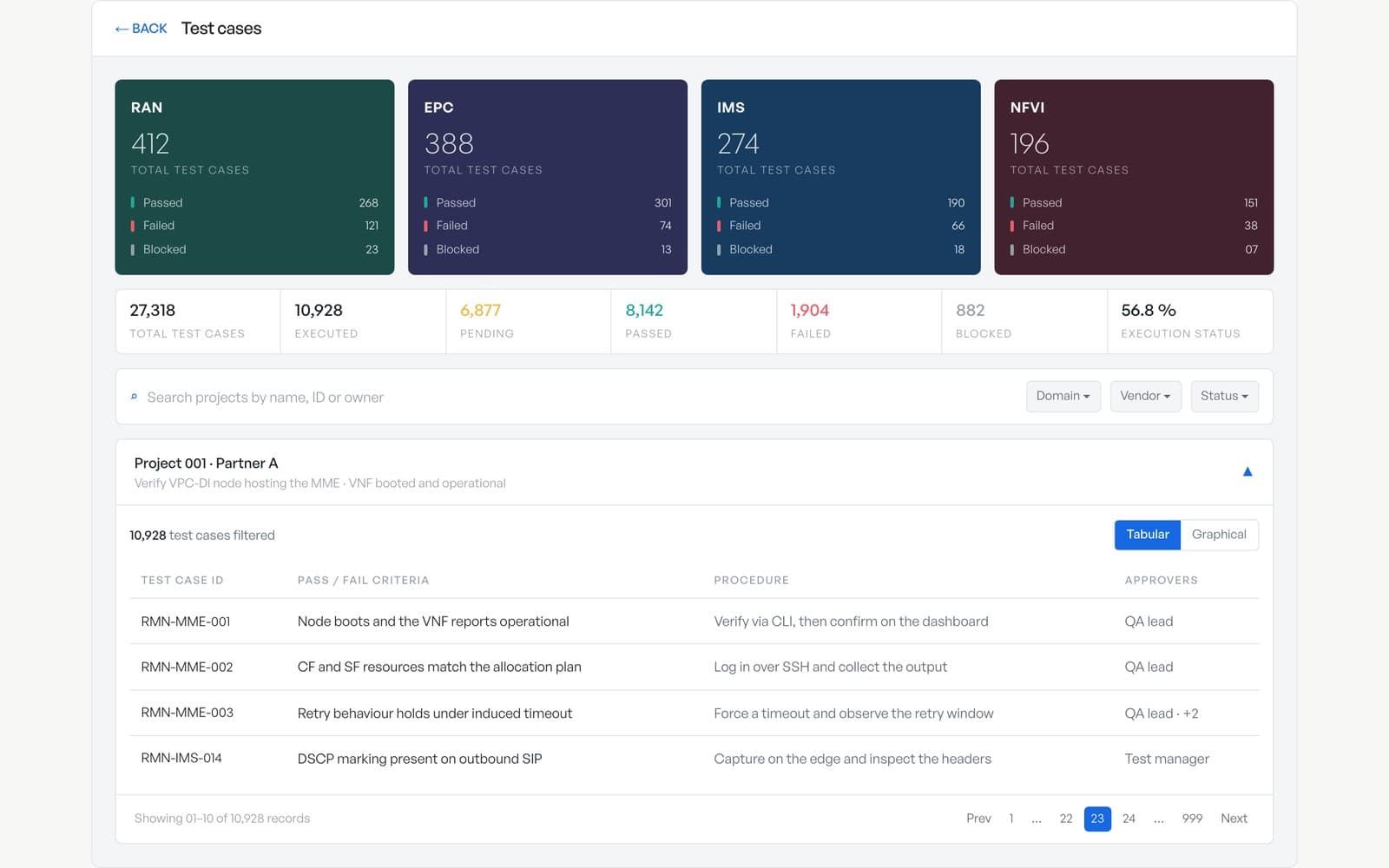

BENEATH: THE TEST-CASE BOARD, HIGH-FIDELITY RECREATION, ORIGINAL UNDER NDA
A product showcase that could not happen in person, turned into an AR/VR experience.
2020 — Sole UX/UI Designer
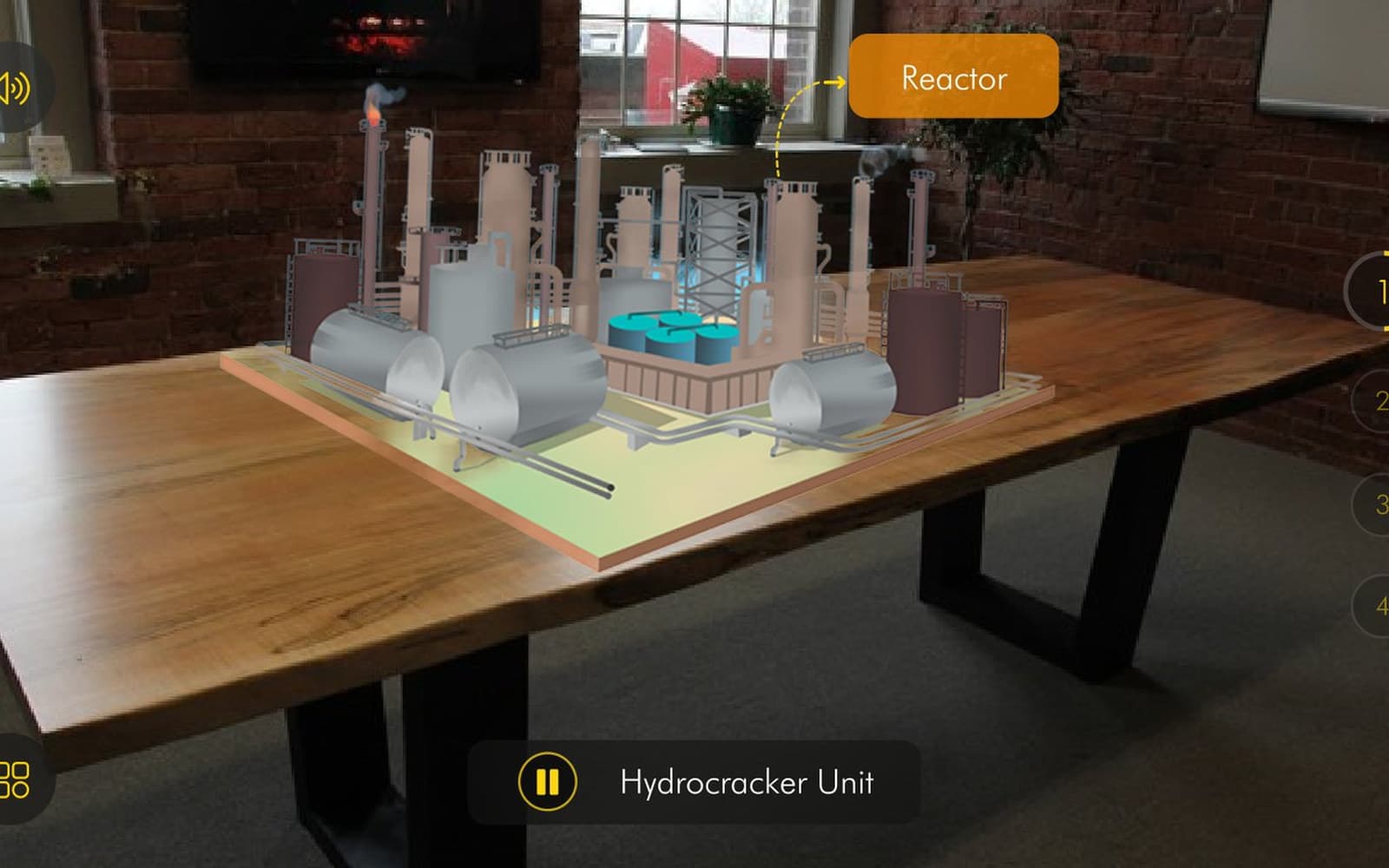

BENEATH: THE HYDROCRACKER UNIT IN AR, AS IT RAN
A brochure trapped in PDFs, rebuilt as a way to choose a journey.
2026 — Solo designer + builder


BENEATH: THE HOME PAGE, AS SHIPPED
The screens Vodafone's support staff live in all day, made clearer and faster.
2020–2023 — Lead UX Designer
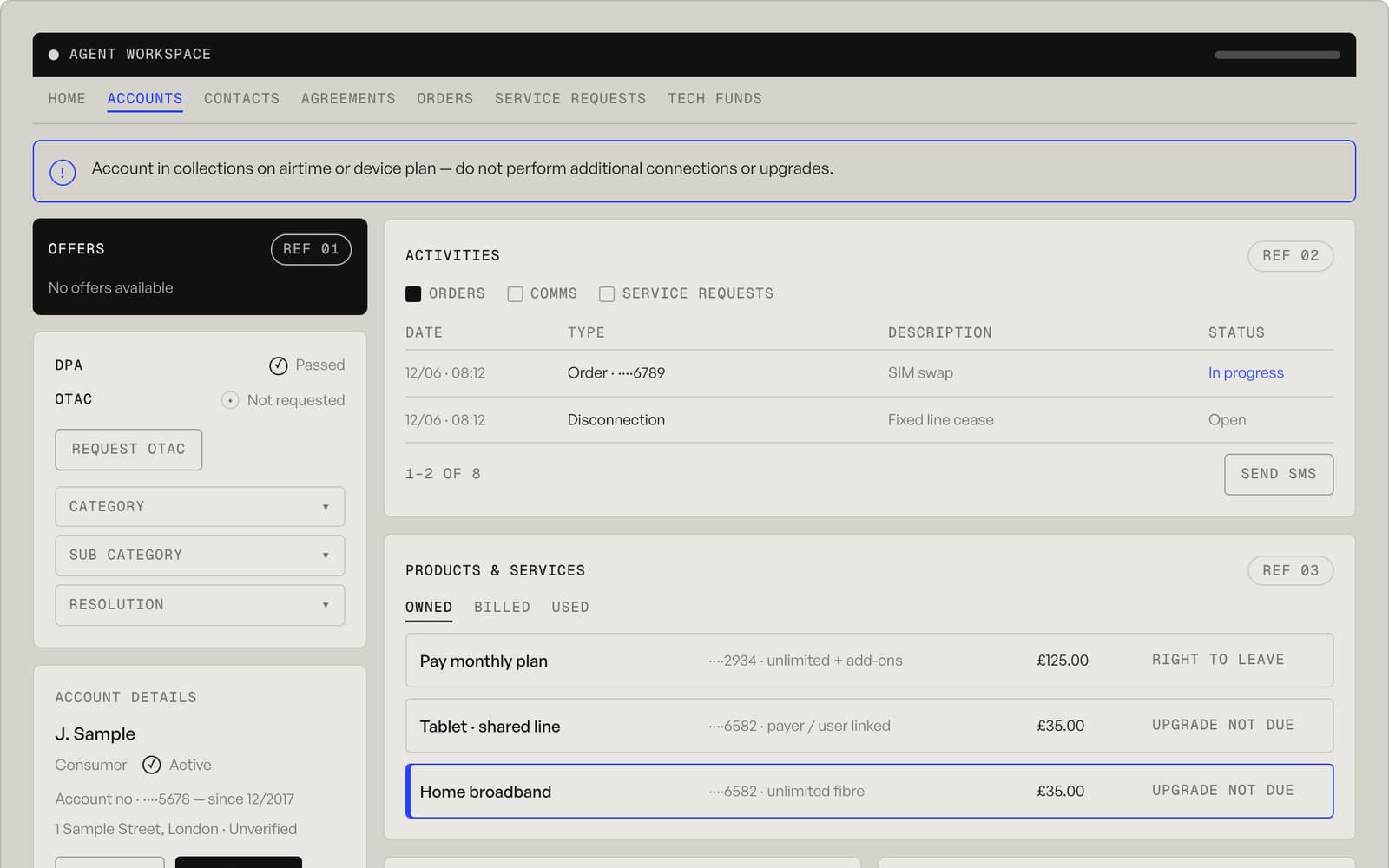

BENEATH: THE HALO ACCOUNT OVERVIEW, ABSTRACT RECREATION, ORIGINAL UNDER NDA
Bonus — not a case, just a favourite
For an Infosys exhibition I designed an AR experience from scratch: a doorway that anchors to the ground in front of you, opening onto a room you can physically walk into and look around. It was shown publicly at the exhibition and drew a lot of interest.
Infosys exhibition · 2019 · captured on the device, as it ran
06 — The person & the ask
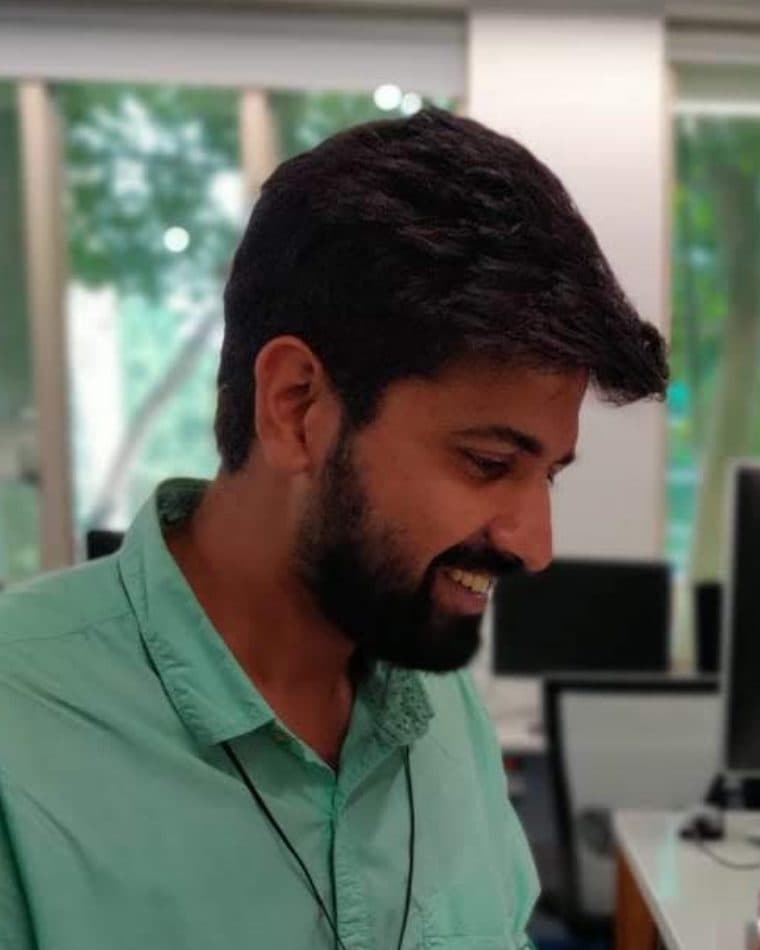
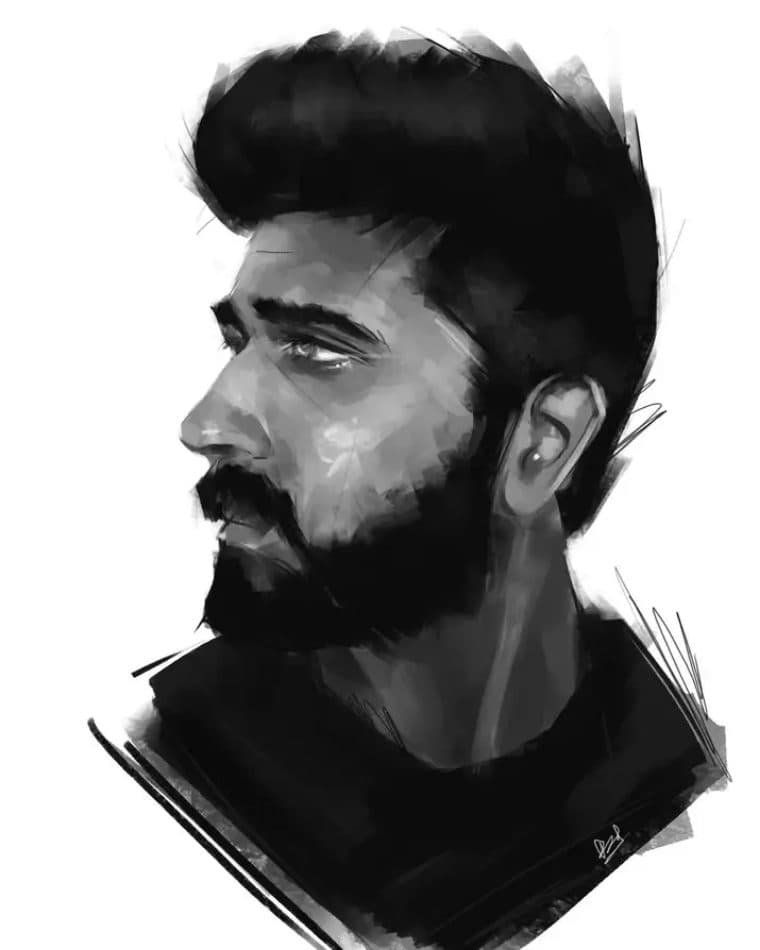
Ryan Soni · India (remote)
I've spent 8 years inside messy projects — government, telecom, energy, startups — and somewhere along the way I stopped being afraid of the mess. Most products don't fail from lack of talent; they fail because nobody made things clear. That's the part of the job I love: sitting with the problem, finding the structure, building the thing. If you're carrying a project that feels heavier than it should, I know that feeling — and it usually clears up faster than you think.
However it looks right now — half a deck, three contradicting documents, an idea that only exists in your head — that's a normal starting point. Most of my projects began exactly there.
Goes straight to me · no forms · I reply within 48 hours
fig. 06 — everything, settled